
"coffee market gap"
900 article(s) found

Brief Introduction to the Treatment Method of Grindness Roast Degree of High Acidity Angola Fine Coffee Bean
Angola Coffee Features: Flavor: Not available in the West in recent years, but previously known for its high acidity Suggested Roast: Medium to Deep Roast: Average Market for Angola Coffee: Mid-1970s, 98% of Angola's annual coffee exports were Roast (probably the best Roast coffee in Africa), total production, 1990
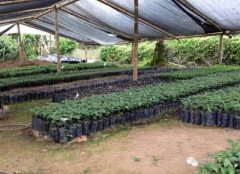
A brief introduction to the cultivation of high-quality Angolan boutique coffee beans, geographical location, climate and altitude
The Secretary-General of the African Coffee Organization (Coffee Organization), Joseph Farrayasarko, said on the 10th that Angola is expected to regain its status as a major coffee producer in the world due to the launch of a nationwide coffee planting campaign. In analyzing the global financial crisis and the situation of the international coffee market, Sako said that there are still gaps in the international coffee market. Angolan coffee should not only improve its output, but also its quality.

Coffee shop management guide, practical coffee shop management plan
Pay close attention to the coffee comment (Weixin Official Accounts vdailycom ) and find a beautiful cafe to open its own small shop. I. Operation mode technical cooperation form. If we are positioning business, leisure coffee shops, it is recommended that partners in high-end office buildings, CBD business districts, high-tech parks, Internet cafes, stations, cinemas, docks or other market gaps and other geographical locations; determine their own

Consistent cultivation of boutique coffee beans in Angola A brief introduction to geographical location, climate and altitude
The market for Angolan coffee: in the mid-1970s, 98 per cent of Angola's annual coffee exports were Roberts (probably the best in Africa), but total production fell in 1990. Most of Angola's coffee was exported to the United States, the Netherlands and, of course, Portugal in the 1970s. Angola produced about 180000 tons of commercial coffee a year.
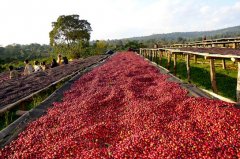
A brief talk on the basic knowledge of coffee beans in Yunnan
Every time when giving lessons to students, some students will curiously take the initiative to ask about many topics of Yunnan coffee beans. Although there are not many people who have really drunk Yunnan coffee, Yunnan small grain coffee has long been famous and respectable. Since most of our students are investors and operators of coffee shops, they play a great role in the development trend of the domestic coffee industry.

The prices of new-style tea drinks have been reduced collectively, while coffee brands such as Starbucks and Ruixing have collectively raised prices, and the coffee market is not enough.
At the beginning of 2022, migrant workers were worried about whether they could withstand the slap of real life, and last year they were able to have a latte in the morning and a cup of milk tea in the afternoon. First, after New Year's Day was told that there was no freedom of milk tea, and then after the Spring Festival, he was told that he had lost the freedom of coffee.

Delicious continuous brewing of ear-hanging coffee
▲ newspaper invited Hu Yuanzheng (right), Hou Guoquan (middle) and Zhang Zhonglun to evaluate the market for ear-hanging filter coffee. ▲ in a busy day, as long as a simple brew, give yourself a gap, have a good cup of coffee. The coffee craze is feverish in Taiwan. Bernardo and Brown Coffee, which are mainly canned seasoned coffee, have launched ear-linked follicular coffee to open up new markets, including Mister Donut.

A brief introduction to the consistent treatment method of grinding degree and baking degree of Angolan boutique coffee beans
The market for Angolan coffee: in the mid-1970s, 98 per cent of Angola's annual coffee exports were Roberts (probably the best in Africa), but total production fell in 1990. Most of Angola's coffee was exported to the United States, the Netherlands and, of course, Portugal in the 1970s. Angola produced about 180000 tons of commercial coffee a year.

Consistent Angola Fine Coffee Bean Origin History and Culture Introduction
Angola was once one of the world's largest coffee producers, with a record coffee production of 225,000 tons in 1974. But Angola's coffee production fell sharply after a 27-year civil war broke out after independence in 1975. The first batch of Angola coffee exported to the United States-11 tons in total-has arrived in the country, Angola's ambassador to the United States, Agostinho Tavares, told the daily Angola in New York on Monday.

Do you know all the diversion grooves in the coffee filter cup?
The sharing of coffee filter cups has also been introduced a lot, and many friends have asked me about my experience in how to select coffee filter cups. In fact, the choice of filter cups does not only depend on their appearance. Different structures and settings of the diversion tank will have different effects on the coffee drip filtration process, so today, with guidance on the direction of selecting the filter cup, let's talk about the right setting of this diversion tank.

"Coffee Wing" buys "Lai Cup Coffee"! Self-service coffee machine is really a good business?
Professional coffee knowledge exchange more coffee bean information please follow coffee workshop (Wechat official account cafe_style) according to 36 Krypton June 10 news, coffee brand Coffee Wing has recently reached an agreement with intelligent coffee machine operator Lai Cup Coffee, this acquisition involves business, team, software and hardware, point, operation, management and other aspects, the specific amount will not be disclosed. According to the introduction

El Salvador Coffee producing area introduces Santa Ana Volcano area
Pacamara bean shape is too large, in the treatment field for peeling and separation, often stuck in the holes or gaps of the machine, the machine must be adjusted from time to time to deal with separately. Due to the limited initial output of Pacamara and the rare fruits of large seeds in sa, most washing plants lack experience in dealing with large coffee fruits, not to mention extra sieves with larger mesh to specially deal with Pacamara species.

A brief introduction to the flavor, taste and aroma characteristics of high quality Angolan boutique coffee beans
Angolan Agriculture Minister Afonso Pedro Kanga revealed that Angolan coffee production this year is expected to double that of last year to 12000 tons. In 2008, in order to regain its status as a major coffee producer in the world, the Angolan government introduced a plan to receive a preferential micro-loan of US $5000 per farmer to grow coffee. Angola used to be one of the largest coffee producers in the world, producing coffee in 1974

No filter paper! Arita ceramic coffee filter cup trial experience.
CERA ECO FILTER (Weixin Official Accounts cafe_style) is a coffee filter cup developed by Asahi Touken in Takeo City, Saga Prefecture. It uses traditional Arita ceramic technology and far infrared effect. The filter cup is composed of two parts as a whole, and the outer side is approximately one.

A brief introduction to the history and culture of the origin and development of high-acidity Angolan boutique coffee beans
The origin of coffee in Angola: 98% of the coffee in Angola (Angola) is Roberts coffee. The best brands in Angola used to be Ambriz, Amborm and NovoRedondo, all of which are known for their consistent quality. Angola was once one of the largest coffee producers in the world, with coffee production reaching a record 22.5 in 1974

A brief introduction to the consistent description of flavor, taste and aroma characteristics of Angolan boutique coffee beans
The Angolan government has also decided to promote improved varieties of coffee according to local conditions. According to information released by the Angolan Coffee Agency, fine coffee is more suitable for cultivation in most provinces of Angola and is the first choice for large-scale promotion by the government. At the same time, Angola will also introduce coffee seeds from Brazil and Costa Rica. Officials say Angola's coffee production is expected to reach 4000 tons in 2006, compared with 2005.
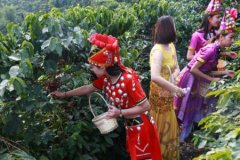
A brief introduction to the flavor, taste and aroma characteristics of Angolan boutique coffee beans, once a big coffee country
The Angolan government is currently working on a development plan to revitalize coffee production in order to restore coffee production across the country to the level of the 1970s. Manuel Dias, director of the Angolan Coffee Agency, recently told the local press that the Angolan government's plan mainly includes expanding growing areas, increasing investment, working hard to support coffee farmers and promoting fine varieties. Uige, Bengo

A brief introduction to the cultivation of boutique coffee beans in Angola, a former coffee country, geographical location, climate and altitude
Angolan Agriculture Minister Afonso Pedro Kanga revealed that Angolan coffee production this year is expected to double that of last year to 12000 tons. In 2008, in order to regain its status as a major coffee producer in the world, the Angolan government introduced a plan to receive a preferential micro-loan of US $5000 per farmer to grow coffee. Angola used to be one of the largest coffee producers in the world, producing coffee in 1974

A brief introduction to the flavor, taste and aroma characteristics of Angolan boutique coffee beans that can hardly be bought.
Angola's ambassador to the United States, Agostinho Tavares, told Jornal de Angola on Monday in New York that the first batch of coffee exported from Angola to the United States (a total of 11 tons) had arrived in the country. Tavares also said that the coffee is the first batch of agricultural products exported to the United States after the entry into force of the African growth and opportunity Act (AGOA). AGOA stipulates that all kinds of products from sub-Saharan African countries can be used.

A brief introduction to the history and culture of the origin and development of fine coffee beans in Angola, once a big coffee country.
The Angolan government is currently working on a development plan to revitalize coffee production in order to restore coffee production across the country to the level of the 1970s. Manuel Dias, director of the Angolan Coffee Agency, recently told the local press that the Angolan government's plan mainly includes expanding growing areas, increasing investment, working hard to support coffee farmers and promoting fine varieties. Uige, Bengo